






Organic Growth and Lead Generation: Using Estate Planning to Win New Business
Speakers
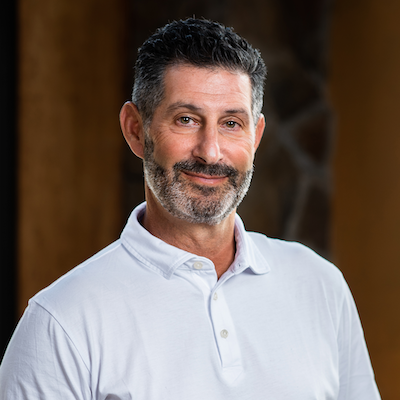
Steve Lockshin
Founder, Vanilla

Larry Gincel, JD, LLM
Solutions Engineer, Vanilla
Speakers
Steve Lockshin
Founder, Vanilla
Larry Gincel, JD, LLM
Solutions Engineer, Vanilla
Key takeaways
- Estate planning works as a lead generation engine and a client retention tool because it changes the conversation with a prospect away from investment performance, an area where every firm sounds the same.
- Sharing a sample estate plan report, even a lightly personalized one, is a low-lift way to show prospects a level of depth most competing pitches don’t offer.
- Vanilla’s Estate Health Check, a short interactive questionnaire, doubles as a prospecting tool: completing it signals real interest and gives an advisor concrete talking points for a first meeting.
- Vanilla’s internal research found that advisors who took a genuinely holistic approach, pairing estate planning with tools like eMoney, had books roughly five times larger and growing three times faster than peers at the same firm.
- There’s a real opportunity for advisors: roughly 90% of clients want this kind of estate planning conversation with their advisor, but only about 30% say they’re actually getting it.
Why estate planning is a growth engine (0:00–4:37)
Steve Lockshin, founder of Vanilla, opened by framing estate planning as foundational to any wealth advisory relationship, not just a service to layer on for existing clients. His shorthand for the choice facing every client: pay now to get documents in order, or pay later through probate, legal fees, and family strain during an already difficult time. He also pointed to liquidity, usually life insurance, as an easy way to differentiate from competitors who are all pitching some version of better asset allocation.
That differentiation matters most in a competitive pitch, Lockshin said: when a prospect with a sudden liquidity event interviews five firms, four of them tend to say the same thing. Estate planning changes the actual conversation, moving from investment performance into a client’s relationships, health, and how they feel about money, which Lockshin said builds trust and intimacy faster than talking about a portfolio ever will.
The underlying logic is that most prospective clients have already heard a version of every firm’s investment pitch before they sit down for a first meeting. Fee structures, model portfolios, and performance benchmarks tend to blur together across firms, which makes it hard for any single advisor to stand out on those terms alone. Estate planning sidesteps that comparison entirely, because it opens with questions about a client’s family, their intentions for their wealth, and the gaps in their existing plan rather than a pitch about returns.
That shift also changes who else ends up in the room. A conversation about documents, guardianship, and liquidity naturally draws in a spouse, adult children, or a family’s other advisors, people who might never sit through a discussion about asset allocation. Each of those additional participants is a potential referral source or a future client in their own right, which is part of why Lockshin frames estate planning as a growth lever rather than purely a service offering.
Turning a sample estate planning report into a lead magnet (4:37–7:15)
Larry Gincel, a solutions engineer at Vanilla, pointed to Vanilla’s client-facing reports as an underused prospecting tool. Sharing a sample report, whether posted as a downloadable link on an advisor’s website or personalized slightly for a specific prospect, shows a level of attention to detail that goes beyond assets under management, an area where the wealth management industry doesn’t score especially well on consumer trust, Lockshin added.
Gincel suggested using the same reports at seminars and webinars, and noted that an interesting enough deliverable often gets forwarded to family members or business colleagues, extending a firm’s reach well past the original prospect.
The appeal of a sample report as marketing material is that it requires almost no incremental work from the advisor once it exists. A report an advisor already produces for an existing client can be generalized and repurposed as a standalone asset, rather than requiring a new piece of content to be written from scratch. That makes it a comparatively low-cost way to demonstrate depth, especially for smaller firms that don’t have dedicated marketing resources.
Because the report format is visual and concrete, tying specific document types and liquidity gaps to a fictional or anonymized client’s situation, it also tends to resonate more with prospects than a generic explanation of what estate planning services include. Seeing what the deliverable actually looks like, rather than being told about it in the abstract, is often what moves a prospect from curious to interested.
The Estate Health Check as a prospecting tool (7:15–10:29)
The Estate Health Check, a short interactive questionnaire advisors can send to prospects or clients, was built specifically with prospecting in mind, Gincel said. It typically takes one to three minutes to complete and surfaces gaps in liquidity or documents, information that flows straight back to the advisor.
Lockshin noted the tool is especially useful for identifying shortfalls that affect what he called the less informed partner in a relationship, often the spouse less involved in day-to-day finances, for whom financial security is particularly important.
Completing the health check is itself a signal of interest, Gincel said, and results can turn into a same-week meeting built directly around a prospect’s own answers. That immediacy is part of what makes the tool useful for prospecting specifically, rather than only for existing clients: a prospect who takes a few minutes to answer questions about their assets and documents has effectively pre-qualified themselves and handed the advisor a ready-made agenda for the first real conversation.
Lockshin added that Vanilla is building toward proactive outreach even for clients who never revisit the tool on their own, flagging simple triggers like a fiduciary who may no longer be the right choice, a child turning eighteen and needing their own basic documents, or a move to a new state whose laws don’t match a client’s existing plan. Each of those triggers represents a moment when a client’s existing plan quietly becomes outdated without anyone noticing, which is exactly the kind of gap an advisor can use to reopen a conversation, whether with an existing client or a lapsed prospect who completed the health check months earlier but never followed up.
Vanilla AI as a value-add during prospecting (10:29–13:22)
Vanilla AI, known as V/AI, gives advisors a fast way to review a prospect’s existing documents through AI-powered document reviews, producing a one-page summary that flags missing provisions, conflicting language, or unclear sections within minutes of a bulk upload.
Lockshin said he uses it to look for specific issues he cares about, like mandatory distributions to beneficiaries, which he said create unnecessary creditor exposure, and that being able to raise those issues in a first conversation signals a level of expertise most competing firms don’t demonstrate.
The practical value during prospecting is speed. Reviewing a prospect’s existing estate documents by hand, especially a full set of wills, trusts, and powers of attorney, can take an advisor or an outside attorney hours before there’s anything concrete to discuss. Compressing that into a same-day turnaround means an advisor can walk into a second meeting with specific, document-level observations instead of general talking points, which reinforces the same differentiation theme Lockshin raised earlier: showing depth a prospect hasn’t already heard from four other firms.
He also pointed to a recent internal study on advisors using Vanilla alongside other planning tools like eMoney: the ones who took a genuinely holistic approach had books roughly five times the size and growing about three times faster than peers at the very same firm who didn’t. Lockshin framed that gap as evidence that the tools are only as effective as the workflow built around them, and that advisors who treat document review and financial planning as a single integrated conversation with a client see meaningfully different outcomes than those who keep the two separate.
Differentiation and lead generation with estate planning (13:22–15:43)
Lockshin described one Vanilla customer, a firm known for digital marketing across Facebook ads, webinars, and email funnels, that built several mini-sites using the Estate Health Check as the core mechanism for identifying whether a visitor needed documents or had a liquidity shortfall. The approach has become one of the firm’s strongest lead sources, Lockshin said.
That example illustrates a broader point about where estate planning fits into a firm’s marketing funnel. Rather than treating it as a service mentioned somewhere on a firm’s website, this customer built its entire top-of-funnel strategy around getting visitors to complete a short questionnaire, then routed anyone who surfaced a real gap directly to an advisor. The mechanism works because it gives an otherwise anonymous website visitor a reason to hand over contact information: a concrete, personalized answer about their own situation, rather than a generic newsletter signup.
That reflects a broader gap Vanilla’s own research keeps turning up: roughly 90 percent of clients say they want this kind of estate planning conversation with their advisor, while only about 30 percent say they’re actually getting it.
Lockshin pointed to that gap as the underlying reason these tactics work as well as they do. Advisors aren’t creating demand that doesn’t exist; they’re meeting demand that’s already there but going unaddressed by most of the industry, which is also why a firm that leans into estate planning early tends to have less competition for that particular conversation than it does for investment performance.
Bringing it together (15:43–16:26)
Gincel closed by framing all of these tactics, website links to sample reports or the Estate Health Check, client webinars, proactive check-ins, as different entry points into the same underlying opportunity. Estate planning, he said, isn’t only a tool for deepening existing client relationships; it’s a legitimate channel for winning new clients and surfacing assets a firm didn’t know it was missing, since a client with a few million dollars under management at one firm often has meaningful assets sitting elsewhere that an estate planning conversation tends to uncover.
Taken together, the through-line is that estate planning gives an advisor a different kind of conversation than every other firm competing for the same prospect, plus concrete tools, sample reports, the Estate Health Check, and AI-assisted document review, to start that conversation and act on it quickly.
Q&A highlights
What kinds of questions are in Vanilla’s Estate Health Check?
Lockshin says it mirrors a normal client conversation: what assets exist inside and outside the estate, what’s liquid versus illiquid, spending levels, and a quick math check on whether there’s enough liquidity if one spouse passes. For a taxable estate, it also runs rough estate tax numbers and flags which documents may be missing or mismatched to the state a client currently lives in.
Are clients ever reluctant to have AI involved in their estate planning process?
Lockshin says he hasn’t seen that pushback yet, and notes AI use is opt-in. He adds that no client data is used for training or leaves Vanilla’s system, and that some of the largest institutions on Wall Street have already vetted the platform’s security.
Is there any reason to use Vanilla with clients who have smaller, non-taxable estates?
Lockshin says yes: liquidity, document structure, and avoiding accidental creditor exposure through mandatory distributions matter regardless of estate size. He argues these smaller adjustments often matter more for a two-million-dollar estate than a much larger one, where the bigger issues are more obviously visible.
About the speakers
Steve Lockshin, Founder, Vanilla
Steve Lockshin is the founder of Vanilla and a principal of AdvicePeriod, and was previously chairman of Convergent Wealth Advisors. He has spent more than three decades advising ultra-high-net-worth families on estate and wealth planning.
Larry Gincel, JD, LLM, Solutions Engineer, Vanilla
Larry Gincel is a Solutions Engineer at Vanilla and an estate planning attorney who previously worked in wealth management at an RIA family office in the high-net-worth space before joining Vanilla.
The information provided here does not constitute legal, financial, or tax advice. It is provided for general informational purposes only. This information may not be updated or reflect changes in law. Please consult with an estate attorney, financial advisor, or tax professional who can advise as to your particular situation.
Holistic wealth management starts here
Join thousands of advisors who use Vanilla to transform their service offering and accelerate revenue growth.