The estate planning playbook with Steve Lockshin
Speakers
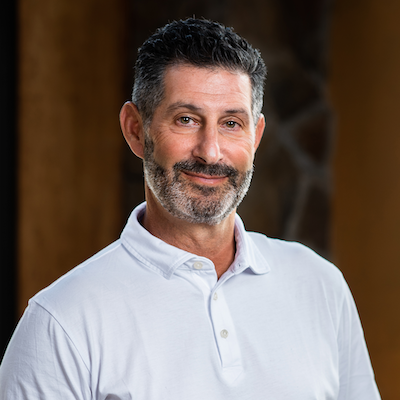
Steve Lockshin
Founder, Vanilla
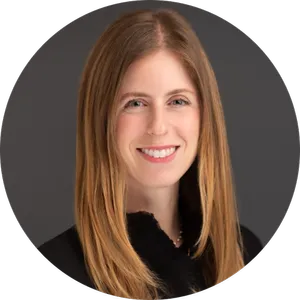
Arielle Lederman
Senior Advisor, AdvicePeriod
Speakers
Steve Lockshin
Founder, Vanilla
Arielle Lederman
Senior Advisor, AdvicePeriod
Key takeaways
- AdvicePeriod flips the traditional advisory model, leading with estate and tax planning instead of investments, an approach Steve Lockshin says can move a client’s projected estate tax bill toward zero.
- The firm’s playbook began as an internal checklist after Lockshin found gaps even inside his own firm, such as missing health care proxies for children turning 18, and it eventually grew into the tool that became Vanilla.
- Reviewing a prospect’s core documents, including wills, powers of attorney, and trusts, often surfaces outdated fiduciary appointments or outright distributions that no longer make sense once a client’s net worth has grown.
- Letters of wishes, non-binding guidance documents for trustees, are increasing in popularity because they let clients revisit their intent annually without rewriting a trust itself.
- Fixed and planning-based fee models, rather than assets under management, change which questions an advisor asks first and can reveal savings that an AUM-focused advisor might never surface.
AdvicePeriod’s estate-first approach to wealth management (0:00–8:00)
AdvicePeriod built its practice around a reversal of the typical advisory conversation. “The typical advisor comes in with investments and talks about maybe taxes and maybe estate planning,” Steve Lockshin said. “We were coming in directly talking about estate and tax planning, and then would talk about investments… estate planning was the main event.”
Arielle Lederman, who spent nearly a decade practicing trust and estate law before joining AdvicePeriod, said the ordering sends a message to clients about what matters. “Traditionally, investments are the focus,” she said, “and the importance isn’t necessarily on the estate planning because it comes after the investments.” Leading with estate planning instead gives clients buy-in and makes advisors more productive at getting work done for them.
Quantifying the value of estate planning first (8:00–16:00)
Lockshin walks through the math his firm uses with prospects. A client with $100 million in net worth and no remaining exemption, left invested at 5% for 45 years, would see that estate roughly double, then double again, compounding toward $800 million, with roughly 40% of that eventually owed in estate tax. “Our job, when we talk about estate planning, is to get that three hundred and twenty million dollar number down to zero or close to zero,” Lockshin said.
Unlike investment strategies, Lockshin noted that estate planning creates immediate, tangible savings without increasing portfolio risk, since the work is largely about repositioning assets rather than taking on new risk. Lederman added that beyond the tax savings, there’s an intangible value in helping clients articulate what they want for their family. “If you don’t plan, the state has plans for you,” she said, describing how intestacy laws dictate outcomes clients never intended.
From AdvicePeriod’s internal checklist to Vanilla (16:00–23:00)
The firm’s estate planning playbook started as a response to gaps Lockshin found even inside his own practice, such as an 18-year-old client’s child heading off to college without a health care proxy on file. “The playbook was a checklist of sorts for everything that we should do for every client periodically,” Lockshin said.
The firm’s fee conversations followed a similar arc. Years ago, after moving $30 million out of a client’s taxable estate, the firm’s investment reports still showed the same bottom-line number, masking the work that had been done. Building a clearer report that separated estate assets from investment assets, Lockshin said, was “the genesis of Vanilla.”
Fee model shapes the questions advisors ask (23:00–28:00)
Lockshin said an AUM-based fee structure changes what an advisor prioritizes. An advisor paid on assets under management, he said, will focus on the $5 million a client holds in liquid assets rather than a $95 million illiquid estate, since that’s where the fee comes from. A planning-fee model instead directs advisors toward document reviews, trust structures, and family conversations that a purely investment-focused relationship tends to skip.
What to look for when reviewing a client’s estate documents (28:00–37:00)
Lederman said her document reviews typically start with two sets of paperwork: core documents such as wills, powers of attorney, and health care proxies, and any irrevocable trusts a client has already established. Most of the documents she reviews, she said, need updates.
Outdated fiduciaries and outright distributions
Lederman looks first at whether documents reflect a client’s current state of residence, since families often move without updating paperwork. She also checks who’s named as executor or trustee. “Very often, the client is surprised,” she said, noting that fiduciaries appointed decades earlier may no longer be appropriate. A related issue: documents drafted when a client had modest assets often leave money outright to children once distributions trigger, an outcome many clients no longer want once their estate has grown into eight or nine figures.
Applying the estate planning playbook to the next generation (37:00–44:00)
Lockshin said core documents, such as wills and health care proxies for adult children, matter regardless of a client’s net worth. Without them, a hospital may not share information with parents if an adult child is injured, and a state’s intestacy laws, not the family’s wishes, determine how assets are divided if someone dies without a will. Both advisors also pointed to intergenerational conversations as a natural extension of the playbook, since a client’s children eventually inherit and often need their own documents in place, particularly as federal exemption levels are set to decrease.
Ongoing maintenance: letters of wishes and annual reviews (44:00–52:00)
Lederman described letters of wishes, non-binding documents that guide a trustee’s discretion in administering a trust, as a tool that has grown more common as more trusts are structured to be flexible and discretionary. “It’s changeable at any time,” she said. “The client can revisit what their intent is every year.” Lockshin added that most attorneys he works with are comfortable with the approach, even though some prefer to bind specific wishes directly into a trust agreement instead.
Beyond letters of wishes, Lockshin pointed to other tasks that belong on a recurring calendar rather than a one-time checklist, including annual exclusion gifting, reviewing fiduciaries, and monitoring irrevocable trusts for opportunities to swap assets in and out as their values change. “Lawyers generally don’t have the optics, the eyes, on these things,” he said, describing why an advisor with an ongoing client relationship is better positioned than an attorney billing by the hour to catch these moments.
Q&A highlights
How should an advisor position themselves to a prospective client when leading with estate planning rather than investments?
Position yourself as being “in the wealth advisory business.” This framing is broad enough to encompass investment management, estate planning, and the emotional and family dynamics of wealth, allowing for a more holistic client relationship.
What does a typical first meeting look like when it centers on estate planning instead of investment management?
The meeting focuses on identifying a real, quantifiable problem, often a specific tax liability tied to the client’s estate, and then presenting a credible, solution-oriented approach based on the client’s information.
How can an advisor make estate planning a priority for a new client?
Prioritize estate planning yourself. When an advisor treats estate planning as a central, critical service, clients will naturally follow that lead and understand its significance in their overall financial strategy.
Why might some attorneys be hesitant to use letters of wishes?
The primary objection is that letters of wishes are not legally binding. Some attorneys prefer to codify specific client intentions directly into trust agreements. However, this approach carries a risk: overly specific trust language can quickly become outdated as family circumstances shift, whereas letters of wishes offer greater flexibility.
About the speakers
Steve Lockshin
Steve Lockshin is co-founder and chairman of Vanilla and a principal of AdvicePeriod, the wealth advisory firm he also co-founded. He previously founded Convergent Wealth Advisors and Fortigent, and was named top independent financial advisor in the United States by Barron’s in 2011.
Arielle Lederman, J.D., LL.M.
Arielle Lederman is a senior wealth advisor and wealth strategist with AdvicePeriod, focused on income, gift, and estate planning for ultra-high-net-worth clients. Before joining AdvicePeriod, she spent nearly a decade practicing as a trusts and estates attorney at AmLaw Top 100 firms.
The information provided here does not constitute legal, financial, or tax advice. It is provided for general informational purposes only. This information may not be updated or reflect changes in law. Please consult with an estate attorney, financial advisor, or tax professional who can advise as to your particular situation.
Holistic wealth management starts here
Join thousands of advisors who use Vanilla to transform their service offering and accelerate revenue growth.