






Estate Planning in 2026: The Data Behind What Clients Actually Want
Speakers
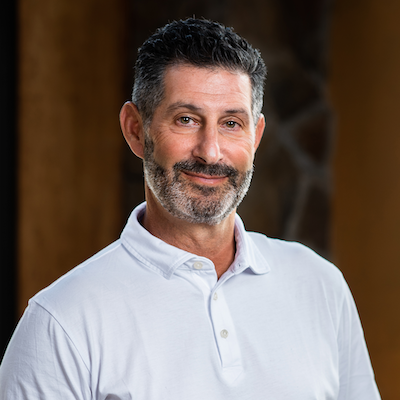
Steve Lockshin
Founder, Vanilla

Sarah Mouser
Managing Director Financial Planning, Verdence Capital Advisors
Speakers
Steve Lockshin
Founder, Vanilla
Sarah Mouser
Managing Director Financial Planning, Verdence Capital Advisors
Key takeaways
- 80% of clients now expect estate planning to be part of their advisor’s offering, and 41% say their advisor, not an attorney or accountant, was the first person they talked with about it.
- There’s a wide gap between intention and action: 97% of clients say discussing their estate plan with family matters, but only 39% have actually done it, an opening for advisors willing to raise the topic directly.
- Women are less likely to lead estate planning decisions today even though 60% say the topic matters deeply to them, and with women set to inherit the bulk of the coming generational wealth transfer, engaging both partners equally is a real opportunity, not just good practice.
- Clients are broadly comfortable with AI in estate planning (84%) as long as a professional stays in the loop, and most (56%) want AI to handle routine tasks so their advisor can focus on strategy.
- Passing down family values ranks as the top priority for many clients, ahead of any financial goal, which means asking about values and family dynamics, not just running the numbers, is where advisors can add the most differentiated value.
Why clients are expecting estate planning from their advisor (2:06–10:41)
According to Vanilla’s 2026 annual State of Estate Planning survey, 41% of clients say their financial advisor, not their attorney or accountant, was the first person they talked to about estate planning, and 80% now expect estate planning to be part of their advisor’s offering.
Sarah Mouser, managing director of financial planning at Verdence Capital Advisors, said the conversation starts by asking questions and listening, since a proper estate plan has to circle back to what a client actually wants to accomplish with their wealth, whether that is philanthropy or funding the next generation.
Steve Lockshin, founder of Vanilla, pointed to a gap: advisors who simply refer clients out to an attorney without knowing whether that attorney is actually a strong center of influence, then never follow up. Early in his career, he says he hounded clients relentlessly, half joking that he all but camped in their front yard, until they finished even a basic plan.
Quantifying the value of an estate planning conversation (10:41–13:31)
Lockshin said he has what he calls an unfair advantage in showing return on a planning fee, since most of his clients have taxable estates: pay him a dollar, save five or ten in estate taxes, a comparison that is easy to put in front of a client. He was careful to separate that tangible tax benefit from the intangible value of being a client’s single point of contact and educating the next generation.
Mouser said Verdence makes a similar case through cash flow modeling across a client’s lifetime, walking through whether it makes sense to prepay taxes now, through a Roth conversion for example, if the next generation will inherit in a higher tax bracket later. Both agreed the throughline is leading with planning rather than assets under management, since an AUM fee alone is a hard case to make when the market is not cooperating.
Closing the gap between intention and action (13:31–17:40)
The report found that 97% of clients believe discussing their estate plan with family is important, yet only 39% have actually done it.
Mouser attributed the gap to emotional intelligence: advisors have to be comfortable initiating an uncomfortable conversation about death, since many clients arrive with outdated documents or none at all regardless of net worth.
Lockshin credited Vanilla’s interactive diagrams with changing that dynamic, since being able to click through a plan and toggle dollar amounts on or off makes it easier to bring the next generation into the discussion, whether they are heading to college or getting married. His own practice, he said, starts nearly every new relationship the same way: ask for existing documents, run them through Vanilla’s AI, and use whatever gaps surface, since most people have gaps, old documents, or no documents at all, as the opening for a real conversation.
The gender gap: an untapped opportunity (19:58–24:47)
About 60% of women say discussing estate planning with their family is extremely important, yet women remain less likely to lead estate planning decisions in their household, and Mouser said the industry is only beginning to shift. She reads the dynamic literally in the room, watching where each spouse chooses to sit, and has found women tend to be less focused on returns and more focused on the softer side of planning: legacy, charitable giving, and education.
That shift matters given the great wealth transfer, in which women are expected to inherit the majority of the wealth passed down over the next two decades. Lockshin said he learned early to always speak to the wife first when working with a couple, since leaving her out of the conversation reliably surfaced at that night’s dinner table. He and Mouser agreed the deeper point is inclusion: men and women often bring different philosophies to a plan, and an advisor’s job is to hold space for both.
What clients actually want from AI-assisted planning (24:47–30:08)
84% of clients said they are comfortable with AI assisted estate planning as long as a professional is overseeing it, and 56% said they would rather AI handle routine tasks while a human focuses on strategy. Lockshin’s answer was that everything that can be automated, should be, and he said advisors tend to underestimate how much that includes, pointing to how much a simple AI notetaker has sharpened his own recall and follow up.
His caveat was to trust but verify, disclose AI use to clients, and lean on the appropriate counsel language that keeps a recommendation from crossing into unauthorized practice of law. Advisors weighing which platform to adopt can start with a general AI estate planning software checklist, since a polished demo does not always hold up against a client’s messy real documents. Mouser said clients do not care how many tools a firm uses, they care about getting more of an advisor’s time and attention, and that younger clients in particular now expect an advisor’s technology stack to keep pace with their own.
Leading with values, not just wealth transfer (30:46–35:18)
40% of consumers told Vanilla that passing down family values is their top priority, ahead of any financial goal, and 54% worry their heirs lack the financial literacy or responsibility to handle an inheritance well.
Mouser said the only way to surface those values is to ask and then listen, since a strategy that looks perfect on paper can still miss what belongs in a client’s comprehensive legacy plan if it ignores what a client actually wants, like a client who simply does not want to prepay taxes no matter the math.
Lockshin illustrated the risk of skipping that conversation with a story about three children who are each promised an equal third of an estate: nobody asks whether one child’s ten grandchildren should really inherit ten times more per branch of the family than a sibling’s single grandchild. He described this problem as money transferred without purpose and responsibility, and said the harder, more valuable conversation is about how and when heirs get access to money, not simply how much.
Q&A highlights
Where is the biggest gap between what clients think their estate plan accomplishes and what it actually does, and how can advisors use technology to surface that early without overwhelming clients?
Visuals and interactive diagrams, specifically being able to click through a waterfall diagram of what a plan currently says, and running what Lockshin calls a fire drill: both spouses die tomorrow, is that really the outcome they want. Checking whether assets are correctly titled and beneficiary designations are current catches problems that diagrams alone can miss, Mouser added.
Is planning for incapacity, like the Five Wishes process, part of the value an advisor adds?
Incapacity planning is essential regardless of the specific framework, noting that advisors are often the first to notice cognitive decline in a client because financial habits tend to slip before family members catch on.
When should advisors bring heirs or other family decision makers into the planning process, and how do you do that without it feeling intrusive?
As early as possible, and calibrated to a client’s comfort level and a family member’s maturity. Failing to engage a surviving spouse or the next generation is one of the more common ways a firm ends up losing that relationship.
Does recommending software like Vanilla for document drafting risk damaging an advisor’s relationship with referring attorneys?
Mouser says it tends to strengthen those relationships instead, since a more educated client makes better use of an attorney’s time. Lockshin adds that an advisor’s obligation is to their client first, and that most attorneys would rather focus on complex work than a simple plan a platform can generate.
How do advisors keep the human side of the relationship from getting lost as more of the work becomes automated?
AI can generate an answer but not the right question, like asking a client whether an unequal number of grandchildren across their children should change how an inheritance gets split. Mouser agrees the technology should free up time for exactly those conversations, not replace them.
About the speakers
Steve Lockshin, Founder, Vanilla
Steve Lockshin is the founder of Vanilla and a principal of AdvicePeriod, and former chairman of Convergent Wealth Advisors. He was named the top independent financial advisor in the country by Barron’s in 2011 and has spent more than three decades advising ultra-high-net-worth families on estate and wealth planning.
Sarah Mouser, CFP, Managing Director of Financial Planning, Verdence Capital Advisors
Sarah Mouser is Managing Director of Financial Planning at Verdence Capital Advisors, where she develops customized planning strategies and leads the firm’s training and mentorship programs. She brings more than two decades of experience in financial planning, with a specialty in estate and legacy planning, tax strategies, and planning around cognitive decline and aging.
The information provided here does not constitute legal, financial, or tax advice. It is provided for general informational purposes only. This information may not be updated or reflect changes in law. Please consult with an estate attorney, financial advisor, or tax professional who can advise as to your particular situation.
Holistic wealth management starts here
Join thousands of advisors who use Vanilla to transform their service offering and accelerate revenue growth.